What Every Dad & Birth Partner Should Know During Labour. A Doula's Guide to Supporting Your Partner at Birth

Updated: Apr 30
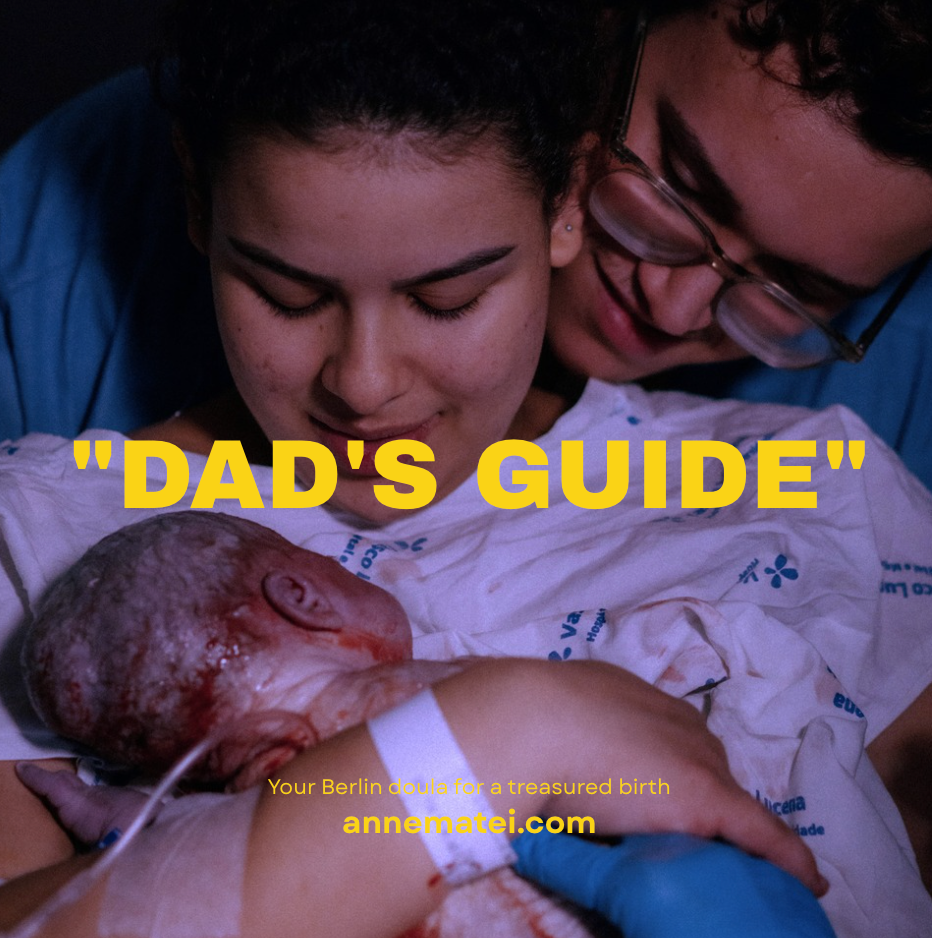
Becoming a dad or being there as a birth partner is exciting, but it can also feel overwhelming.
After supporting families across cultures and unique dynamics here in Berlin, I’ve seen how different personalities handle the intensity of the birth room. Every partner brings their own set of fears and strengths, and how those are managed has a massive impact on the birthing person and the family's first moments together.
Here are a few reflections on navigating those expectations and a couple of keys to feel confident in your "role".
First things first.... do you actually want to be there?
Have you really considered if you actually want to be present during labour and birth?
I think this is an essential discussion to have.
Nowadays we "expect" from fathers/partners to be present, but...some would actually prefer not to come, or not having the pressure to be there continuously.
The presence of someone who does not want to be there and spread fear, is contagious and will impact the birthing person.
Take the time to talk about each other's needs, expectations, fears and boundaries.
It is beautiful to see involved partners; for some, this moment will be a revelation, a wonderful memory they will cherish. But I believe it is equally beautiful to see partners who are aware of their limits and fears, and think of alternatives (not come, take breaks away etc.)
You can't plan and control your birth, but you can choose who comes with you, how and why.
As a doula, I am the doula of the mother as much as for the other partner. Because they also need reassurance and care.
Once this is said... if you would like to be present and wonder how to "deal"with the situation.
The answer: you don’t to do "tricks" or to have medical knowledge. What matters most is your calm presence.
Understand That Labour Can Look Intense
Labour is powerful and unpredictable. She may:
Yell or cry
Shake or tremble
Feel despair, then joy moments later
Even say that she is never going to manage and even "die"! (this is typical of transition phase!)
👉 This is all normal. Nothing is “wrong.” Your role is to stay calm and steady while she goes through the process, and respect these changes.
Your Presence Is the Most Important Support
You don’t need to “fix” labour. Simply being present, grounded, and loving can change the whole experience.
Stay close
Hold her hand
Listen without judgment
👉 Think of yourself as her anchor, not her coach.

Learn the Basics of Labour
A normal labour can last over days without it being problematic.
That being said, some labour only last couple of hours. Birth is absolutely unpredictable! You need to understand and accept this reality: no one will be able to control or predict much during the process. You need the remain open and flexible.
Take time to understand the stages of labour so you know what’s happening.
Early labour
Active labour
Transition phase (when she will say that she is going to die/ she can't no more!)
Pushing phase
Birth of the baby
Birth of the placenta
Golden Hour
👉 What not to say: “This will be quick” or “It won’t hurt.”👉 If you don’t know the answer, just say: “I’m not sure, but I’m here with you.” ,“What does your gut feeling tell you?”, “Let me ask, let me look it up”
Protect Your Partner's Birth Bubble
Women in labour need privacy and focus. Just like sex, birth needs privacy.
You can help by:
Lowering bright lights
Reducing interruptions
Handling communication with staff if needed
Create a nice cozy atmosphere in the hospital ward (as much as possible: lights, music etc.
Support her staying at home for as long as she feels is right, without rushing her
👉 Protecting her bubble helps her body do its work. This is also very important right after the birth, when she is bonding with baby during the first hours after birth and doing the first feed during the "Golden Hour"
Offer Simple Comfort Measures
Comfort doesn’t have to be complicated. You can:
Suggest a warm shower
Massage her back or shoulders
Remind her to breathe deeply
Move with her: walk, sway, or dance. Movement is absoluetly key!
Remind her to change positions, breathe, stretch
Guide her with meditation, positive visualisations (how the baby will look like, a place she loves where she feels safe etc).
👉 Look at her signals, if she seems fine and found something that works, just let her be. If she is lost, you can suggest something.
Use Positive and Encouraging Words
Words are powerful in labour. Use phrases like:
“You’re doing amazing.”
“I’m proud of you.”
“You are strong.”
“I trust you.”
"You are doing it!"
Focus her on the next contraction, or the next 10 minutes. You move oin together step by step without projecting yourself in the future of "how long will this take?", "will the pain be worse later ...?". You are here to ground her: HERE and NOW. Here and now she is doing this!
👉 Avoid “It’s almost over” or “Don’t worry”
Respect Her Changing Needs
She may want closeness one moment and space the next.
👉 Don’t take it personally. Changing preferences are normal during labour.
Be Her Advocate
You can support her voice by:
Repeating her questions to staff
Asking for clarification on interventions
Using the BRAIN acronym: Benefits, Risks, Alternatives, Intuition, Nothing
If she says No, be clear that it's a NO!
Write the birth plan together, be familiar with all of it, have it at reach, remind the staff of your preferences
👉 Advocacy helps her feel safe and respected. Have your Safety Card at reach to know your rights and basics of advocacy!
Little Attentions
Small actions make a big difference:
Offer sips of water
Provide light snacks
Keep her comfortable with blankets or pillows
Get some fresh air in the room
Give her a firm but loving back rub, shoulder or neck massage, foot massage
Ask her what she needs if you are not sure
You Don’t Have to Be the Only Support Person
A doula can be a great support not only for the birthing person, but for you, the partner as well.
During pregnancy, a doula helps you both feel prepared and confident by explaining what to expect, how birth works, and how they can offer meaningful support. During labor and birth, the doula reassures the partner, answers questions in the moment, and helps normalize what is happening. Studies have shown that the presence of a doula is a huge contributor to a positive, easier birth experiences for the birthing person but also for fathers/partners.
Your doula's presence also allows you to take breaks when needed—rest, eat, or step outside—knowing that your loved one is continuously supported.
With a doula present, partners often feel less pressure to “do everything right” and can stay emotionally present, connected, and calm.
Final Thoughts: Your Role Matters
Birth is unpredictable, but one thing is certain: your presence has power.
You don’t need special tools or perfect techniques, you dont need to know much about birth or have any medical knowledge.
You just need to be there: calm, grounded, and loving.
That is what she will remember forever.
Anne Matei is a birth and postpartum doula based in Berlin, supporting French-, English-, and German-speaking families. She accompanies births in hospitals, birth centers, and home births alongside midwives. Read what families say about working with her in client testimonials.
Feel free to get in touch to schedule a non-binding introductory call.


Comments